


Hindustani classical music is not just an art; it is a path which connects its listeners and practitioners to the glory of sanctity. The treasury of Indian cultural heritage describes the purity of the tradition held by Indian classical music classes in Bangalore. The performing art is one of the oldest forms, which is influenced by the Vedas and other esteemed musical traditions and philosophies. The prime features of Hindustani classical music revolve around the integrity of Raag, and the positions of the notes (swars). The rendition encompasses the diligence of the emotion which is to be expressed by the raag. It is all about creating positive vibes! The authentic classical vocal musical classes in Bangalore styles are Dhrupad and Khayal. To add on, they spread their wings across a range of semi-classical styles like Ghazal, Dadra, Chaiti, Tumri, Kajri, Bhajan and the list continues. The rendition is further ornamented with murki, andolan and gamak. The resonating voice synchronizes with shruthi (scale) and rhythm (taal) to transcend the listeners deep into tranquility.
The classical music heritage of India is over 3000 years old /with its origins in the oldest of Indian scriptures, the Vedas. It has been kept alive over the centuries and has reached us today through the sacred Guru-Shishya Parampara.
The purpose of Indian classical music has been to lead the musician and the listener into the depths of their being, to experience the divinity that resides within. Every note in Indian classical music is self-luminous, glowing
with a light of its own. And has the potential to give us a glimpse of our own inner light.
We feel that it is the responsibility of the institution to take a larger overview of the art and its potentiality of Assimilating Social and Cultural changes.




Frequency of classes : Twice a week (both weekday and weekend classes are available), each class duration is 1.5 hrs
Conception of Ragas, understanding all the parameters of Ragas. This living art has an insatiable thirst and is practiced through different genres of music namely high classical styles like Dhrupada, Dhamara, and The Khayala( traditional Bandish and intricate compositions or Cheej in musical terminology), light classical styles like Thumri ( Banaras Anga, Punjabi anga and Bandishi Thumri), Dadara, Tappa, Bhajans, poetry oriented popular styles like Ghazals, Bhajans etc. The efforts to preserve the contemporary Gharana music, extensive in its coverage and selective in its method practiced at Sangeet Sadhana are exemplary.
The purpose of this class is to give swaragyan. Elementary lessons ( Swaradhyaya) of shruti, swara, Sur and Tala( Talagyan), sargams, rules of raagas aroha avaroha, vadi- samvadis, the swar sangatis, pakad, and Paltas listening to thekas of Taal and keeping a mental note of tala while demonstrating. Concepts of saptak, Thaat paddhati or parent scales etc are taught.
2 Weeks
4 weeks ( 8 classes )
2 Weeks
4 weeks
Each form will Take 4 weeks
Each Raag will Take 8 weeks
12 Weeks
Understanding the aesthetic structure of ragas, the elements associated with musical expression. Students at this stage develop the ability to identify Raagas and its dynamics. Analysis of Ragas with similar or identical scales and note patterns. Role of ornamentations like Meend, Kana, Khatka, Murki in the delineation of the Raga. Listening to practical demonstration of the musicians intently and identify the note formation of the compositions.
1.5 Years
2.5 Years
2.5 Years
Understanding and rendering compositions modified to suit the artistic capability of an individual. Here The artists accomplishment can be discerned from his mastery over complex taans and high tempo ( sa- re- ga- ma ) ornamentation within the framework of the raga thereby acquiring musical craftsmanship of high order.
This section is meant for people who see music as a mode of entertainment and encouragement. Here the musician is engaged mostly in the act of performance. We teach contemporary Bollywood songs and as well as Hindi Movie classics. The artist is off course quite well aware of the grammatical character of the raga as he sets out to sing / play.
Class duration is 2.5 hrs per session and frequency is once a week on Saturdays
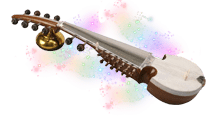
Fingering Techniques of improving or modifying the quality of sound production in order to increase the aesthetic effects are emphasised. Some of these embellishments are kana or grace notes, kampan or tremor, krintan or pizzicato, zamzama, meend or portamento or glissandi, Ladi( quick tremolo strokes) are taught with fine detailing in order to appreciate the subtleties involved in playing Sitar. Similar ornaments also exist in the case of Sarod but involve slightly different techniques, since the latter does not have frets.
Bansuri ( long Flute ) – We use both classical and semi classical style of playing the flute . Class duration is 2.5 hrs per session and frequency is once a week on Sunday.
Understanding the theka which thus provides the standard for the improvisations( uthan, peshkar, kayada, Rela, gat, Tihai, Tukda/chakradhar). Sound production style which is the quality and the techniques used . Rhythmic practices form the core of our teaching methodology here. We follow the traditional aalap-jod-jhala-gat sequence. Instrumental renditions either follow the tantrakari ang or the gayaki ang.
6 Months
2.5 Years
5 Years


If you are looking for an authentic place to learn Hindustani classical music this is the place to look forward. I thoroughly enjoyed the way they taught & the attention they gave. You can actually feel the guru shishya parampara followed here unlike lot of places which are in the business of music.

I joined Sangeet Sadhana 4 months back for Hindustani Classical music. Its really helping me to explore music.Classes are well arranged with detailed Notes and Individual focus.If you want to learn Hindustani Classical music from scratch Sangeet Sadhana is the place for you.
I have started my music classes in sangeet sadhana 6 months back, Great place to learn classical Hindustani music. Sangeet Sadhana follows guru sishya parampara which helps each student to lean with focus and in a traditional way. Perfect place and perfect environment for practice.Teachers over here are awsome they take care by attention to individual.
Awesome place to learn Music!!! Anindta mam and Ritesh Sir are outstanding teachers. Definitely worth learning if you want to learn music.
I have been part of Sangeet sadhana for more than 1.5 years. I am glad to be part of a school which is not only teaching students music and art but also nurturing them to be humble in life. Concept of guru shishya parampara which is followed in the school helps you in connecting to music in profound way. Passion and knowledge which gurus in this institute have for classical music is awesome. I look forward for my class as I get to learn new things everyday. In addition we have lot of baithaks organised by school where students get a platform to showcase their learning.


